Covid-19 is still the Future

Two links that are the most impactful Covid-19 thinking I have come across. Both from April, both from the minds of Big Tech titans, and both before the full tragedy and the catalyzing social effects would come into focus.

The first is the opening 10 minutes of Eric Weinstein’s podcast The Portal, Episode 31 with Ryan Holiday. In it Weinstein paraphrases a recent conversation with his wife, a notable economist. In the recounting, she is explaining to him how Covid-19 represents every aspect of the future, a sweeping statement by any measure. But any skepticism you may harbor is immediately overcome by Weinstein’s profound stream of inter-related issues stemming from this pandemic. Take a listen here:

The Portal, Episode 31 – Ryan Holiday

It’s an amazing summary, though it obviously excludes the activism in recent weeks after the murder of George Floyd. The final minute hypothesizes that it didn’t have to be Covid-19, but any sufficient global crisis would have highlighted how interconnected all of these current issues are. It’s a tantalizing thought.

*

The second link comes from Marc Andreesson. It’s an American call to arms and I’ll let it speak for itself. MA’s essay also excludes notions of social or racial reckoning as a form of building, but I feel comfortable enfolding that goal into his larger message. One of the miraculous outcomes from the recent social justice protests is large support for re-imagining entire social structures.

IT’S TIME TO BUILD

*

On culture and history, one of my most over used metaphors is to describe the object or event as a prism through which the refracted light of the world is able to be seen (almost always I am listing a specific idea or theme that is being refracted, I tend to abstain from saying phrases like “the light of the world”, but I digress). What is the angle of the light; which focal lengths and materials were used; who crafted the prism; where do you stand in relation – all integral questions that frame any understanding.

I am conditioned to see more or less of the world given the size and magnification of any single prism. I tend to see less through the pin hole of a single painting than I do from a film, though both encode meaning that extends beyond their respective frames. What I believe Weinstein was getting at above is that Covid-19 represents a massive prism. As the virus continues to roil this country, and now much of the developing world, we should remember that this is not normal, this is extraordinary. Our collective understanding and response to this event should match the scale.

The Great Power Nation of Fruit

The newest Bangkok Dispatch from the Times by Hannah Beech. Excellent photos and summary of the unique fruits Thailand exports to the region. This is controversial to many close to me, but I am a huge fan of the durian along with most of the other fruits profiled here:

Eating Thai Fruit Demands Serious Effort but Delivers Sublime Reward (NYT)

I particularly appreciate the theme of hardship embodied by these fruits and the Thais who harvest, supply and enjoy them. My narrow perception of Bangkok is that it is a city convulsing with political, social and economic violence that seemingly everyone pretends is normal. Not unlike the heat there, it’s too overwhelming to ignore but simultaneously too omnipresent to feel like you have anything novel to say about it. It’s just the way it is, you hydrate and move along.

Focused culture pieces like this one cut through that overbearing haze and locate the humanity within.

For another great example, check out Beech’s recent piece on Spirit Houses (NYT), an unique aspect to Bangkok’s topography and a different perspective on violence. Even better photos in that one, especially the final shot.

Engagement Post-Mortem

I highly recommend this article on the end of Engagement with China by Orville Schell.

Engagement Post-Mortem

I found the section on Hu Jintao (and Bush) to be particularly noteworthy. The standard story tends to be that Hu and Wen Jiabao were ultimately seen within the Party as too passive when it came to international engagement and too focused on rural development. The result was an enlarged conservative block as more cadres started getting anxious (and very rich) and they pivoted back to the more hardline Xi. Schell traces a different story re-characterizing the passivity of Hu and Wen as evidence of general Party inattentiveness. He locates this period as the primary root of the death of engagement. It’s compelling stuff.

I also found Schell’s descriptions of the remarkable continuities and ingenuities of subsequent American administrations in the final section to be quite thought-provoking.

Much Ado About Nothing (2012)

I really can’t say that I enjoyed this. Director Joss Whedon’s modern setting and his interpretation of the stage directions just felt. . . I don’t know, blasé. Worse, everything about this whiffed of a bad made-for-TV movie or an episode of a teen television drama. See the ‘house’ setting, the music (by Whedon), the sit-com camerawork, the frantic in-scene cutting for dramatic effect, the melodramatic tone shifts, its general failure at humor, or even the all-white cast for the major examples. Why did Whedon turn Shakespeare into an episode of The O.C. filmed in black & white with talented theater actors?

much-ado-about-nothing

Rhetorical effect aside, it’s a question that I do believe is worth trying answer. Something tells me that this was all on purpose, and not a result of a low budget or an expedited 12-day shooting schedule. Is Whedon commenting on how Shakespeare lives on in the plots of millennial teen TV dramas? Is he simply having fun blurring the line between high and low art? Moreover, is he expressing an ideal about popular mass culture, perhaps that something like The Avengers (Whedon’s superior 2012 film) and Shakespeare’s plays share more in common as populist entertainments than in where they tend to diverge in the discerning eyes of the intellectual class?

I am unfamiliar with Whedon’s vast catalog of TV work, so I think I’ll halt this line of questioning for a later date when I am more acquainted. Unfortunately, if this synthesis of art film aesthetics, Shakespearean language and television storytelling tropes were more successful, I might be more willing to invest the time to watch some of Buffy the Vampire Slayer sooner, rather than later.

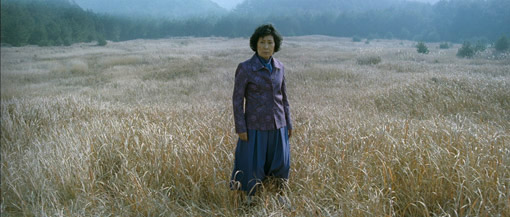
Mother

Is Mother the best non-Hitchcock Hitchcock film? ¹

*

I had been dying to revisit this one. As usual, director Bong Joon-ho is juggling a lot of balls at once while spinning a very taut yarn. One of the more subtler balls (concrete blocks?) in the air is his world building. It’s a unique skill of Bong’s that he exercises much more overtly in his science fiction & monster features, but one that is perhaps most successful here.

mothr1

Notice how many people in this nameless town roll their eyes when they see Mother enter the room; or how many young men determine the course and roadblocks for Mother’s vigilant(e) investigation; and how many of these young men she has known since they were children. Marginal town figures – drunks, homeless, ex-military conscripts, slimy lawyers, feebleminded school boys – populate the script, kept in check by unscrupulous cops, politician’s wives and big shot professors merely in town for the golf course.

Consider that Mother runs a shop selling medicinal herbs, roots, and fungi, in addition to unlicensed acupuncture. One of the opening shots is from Mother’s perspective looking out of her cavernous storefront, the walls overflowing with her dry and withered products, framing her adult son dancing with a dog on the street. Much later we hear an echo, a blood-curdling scream when a long-suppressed murder-suicide attempt is unearthed.

As much as this film is a portrait of Mother, it’s also a portrait of a town on the periphery of the modern. This is a society transformed by a future out of reach, dragged along with a past it’s trying to forget. A story where the real action has already happened and all we are seeing is the complicated aftermath. This is a film about the folks that were left behind.

Likewise, Bong’s film is akin to a peculiar and precarious chanterelle, decomposing and processing the runoff.

*

¹ Bong’s newest film Parasite should have US distribution this Fall. The film won the Palme d’Or at the 2019 Cannes Film Festival.